
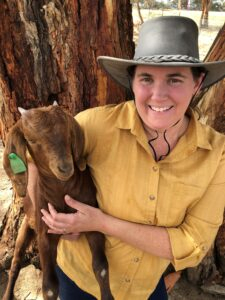
Written by Alison Smith, Rivendell Rural Finance. Last reviewed: 26/10/2026.
Hobby farm finance is different from a standard home loan. Lenders look closely at land size, zoning, location and how you plan to use the property, and each bank draws the line in a different place. This guide explains what lenders look for, how much you may need to borrow and save, and how to prepare an application that gets approved.
General information only, not personal financial advice. Your circumstances and lender policies will affect your options.
What is a hobby farm, and why does it matter for finance?
A hobby farm is a rural property used mainly for lifestyle: a home, a few animals, a veggie patch or orchard, perhaps some grazing. There is no single legal definition based on acreage. What matters to a lender is whether the property is primarily a residence and whether it produces meaningful farm income.
That distinction decides which type of loan you are looking at:
- Hobby farm or lifestyle property: usually assessed as a rural residential home loan, based on your personal income.
- Commercial farm: assessed as an agricultural or commercial loan, based on the farm business and its financials.
If your plan sits between the two, for example selling produce or running farm stays, tell your broker early. It can change which lenders will consider you.
What lenders look at when assessing a hobby farm loan
Most lenders apply their own rules, so a property declined by one bank may be acceptable to another. The main factors are:
- Land size. Many lenders prefer smaller holdings, commonly under about 10 hectares, with some considering larger blocks.
- Zoning. Land zoned for rural residential or lifestyle use is generally easier to finance than land zoned primarily for agricultural production, commercial or industrial use.
- Location. Some lenders apply postcode restrictions. Properties close to towns or regional centres are usually easier to fund than remote ones.
- Access. Legal, all-weather road access matters. Well-maintained dirt roads are often acceptable.
- Water and services. Dams, bores, tanks, septic systems and power supply can all affect valuation and lender comfort.
- Improvements. Houses, sheds and fencing add value. Large commercial-style infrastructure can make a property harder to classify.
- Farm income. Many lenders will not rely on farm income to approve a home loan, so you may need to qualify on your wages, business income or other earnings.
How much deposit do you need?
Deposit requirements depend on the lender, property size and use. As a general guide, larger or more remote properties tend to need a bigger deposit than a standard suburban home.
Budget for costs beyond the deposit as well:
- Stamp duty and legal fees
- Building and pest inspections, and a water and soil assessment where relevant
- Fencing, water storage, machinery and livestock (these are usually not covered by a home loan)
- Insurance, council rates and ongoing maintenance
Which loan type suits your plan?
| Your plan | Common loan structure |
|---|---|
| Buy an existing rural residential property | Rural or lifestyle home loan |
| Buy land and build | Land loan plus construction loan |
| Buy equipment or machinery | Equipment finance or asset finance |
| Run a farm business alongside | Commercial or agricultural loan, possibly alongside a home loan |
| Improve or expand the property | Refinance, top-up or line of credit, depending on lender |
Hobby farm or business? Why it affects tax and lending
Whether your activity is a hobby or a business affects both how a bank treats the loan and how the ATO treats your income and losses. Use the ATO’s guidance and speak to a registered tax agent or accountant before making assumptions about deductions.
How to prepare your application
- Get clear on your plan: how you will use the property and whether you expect any income from it.
- Check your borrowing power with a broker before you start inspecting.
- Gather documents: ID, payslips or tax returns, bank statements, details of debts and living expenses, and the contract of sale or property details.
- Check zoning and access through the local council planning portal before making an offer.
- Choose lenders that suit the property, not just the lowest advertised rate.
- Allow time. Rural properties can take longer to value and assess than standard homes.
Common reasons hobby farm loans get declined
- The property is too large or zoned in a way the lender does not accept
- The location is outside the lender’s postcode policy
- Farm income is being used to service the loan
- Access, water or infrastructure issues affect the valuation
- The application was made to the wrong lender first
Applying to the wrong lender can leave a credit enquiry on your file, so matching the property to the right lender up front helps.
Hobby farm finance FAQs
Can I get a home loan for a hobby farm?
Often yes, if the property is primarily used as a residence and meets the lender’s land size, zoning and location rules. Policies vary, so the choice of lender matters.
How much deposit do I need for a hobby farm?
It depends on the lender and the property. Larger and more remote properties generally need a bigger deposit.
Will a bank count farm income when assessing my loan?
Many lenders will not rely on farm income for a home loan assessment. A broker can tell you which lenders treat it differently.
What is the maximum land size for a hobby farm loan?
There is no universal limit. Many lenders prefer under about 10 hectares, and some consider more.
Can I finance livestock and machinery with a hobby farm loan?
A home loan typically does not cover livestock or machinery. Equipment finance or other products may be available.
Can I buy vacant rural land and build later?
Yes, in many cases, using a land loan followed by construction finance. Requirements vary by lender.
Is a hobby farm loan harder to get than a normal home loan?
Often, because lenders see rural property as higher risk. Working with a broker who knows which lenders accept which properties improves your chances.
Which areas do you service?
Yes. We’re based in Bungendore NSW and help hobby farm and rural buyers across NSW. Check our service areas page, or call 1300 653 200 to confirm we cover your area.
Next steps
If you are planning to buy or refinance a hobby farm, talk to Rivendell Rural Finance about your plans before you start inspecting properties. We will check the property type and your borrowing power, and match you with lenders that suit your situation.
Related reading
- Loans for acreage
- Small acreage finance guide
- Loan for rural property
- Farming loans in Australia
- Rural finance services for farmers
Rivendell Rural Finance ABN 36 162 165 540 is an authorised credit representative of Australian Credit Licence 384704. This content is general information and does not take into account your personal circumstances.